Villeroy & Boch + Magnolia
Building a Unified Content Commerce Experience with Magnolia


websites launched in 6 months
The basics
Sobre la historia del cliente
Founded in 1748 and headquartered in Mettlach, Germany, Villeroy & Boch is one of the world’s leading premium brands for ceramic products. As a family-owned company with a rich heritage, it embodies innovation, tradition, and timeless style. Deeply rooted in European culture, Villeroy & Boch has evolved from a ceramic manufacturer into an international lifestyle brand, offering high-quality products across the Bath & Wellness and Dining, Living & Lifestyle segments. Represented in over 125 countries, the brand continues to preserve its identity while setting global standards in design and quality.

Before implementing Magnolia, Villeroy & Boch faced a significant challenge with outdated, disparate systems that resulted in inconsistent brand experiences and slow content delivery across its various digital properties. By adopting a composable architecture with Magnolia as the central content hub, the company was able to unify its websites and e-commerce shops, creating a seamless customer journey from inspiration to transaction. This strategic move enabled a rapid global rollout, with 33 sites launched within just six months.
The Challenge
A Fragmented Digital Ecosystem Hindering the Customer Experience
As a leading company in the home and living industry, Villeroy & Boch faced significant technical and business problems. The company's digital presence was fragmented across multiple outdated platforms. The “Dining & Lifestyle” business unit, which is B2C, was supported by 16 separate e-commerce shops on a legacy SFCC SFRA basis. Meanwhile, the “Bath & Wellness” and “Living” segments were commercialized in B2B via partner shops, with product information and catalogs residing on 33 end-consumer websites built on a legacy Typo3 platform. This made it difficult to achieve their goal of providing a seamless customer experience, as different business units had disparate design aesthetics and inconsistent structures. The lack of a flexible, state-of-the-art CMS made it hard to create engaging, consistent content and led to a disjointed customer journey.
The Solution
Unifying Content and Commerce with a Composable Platform
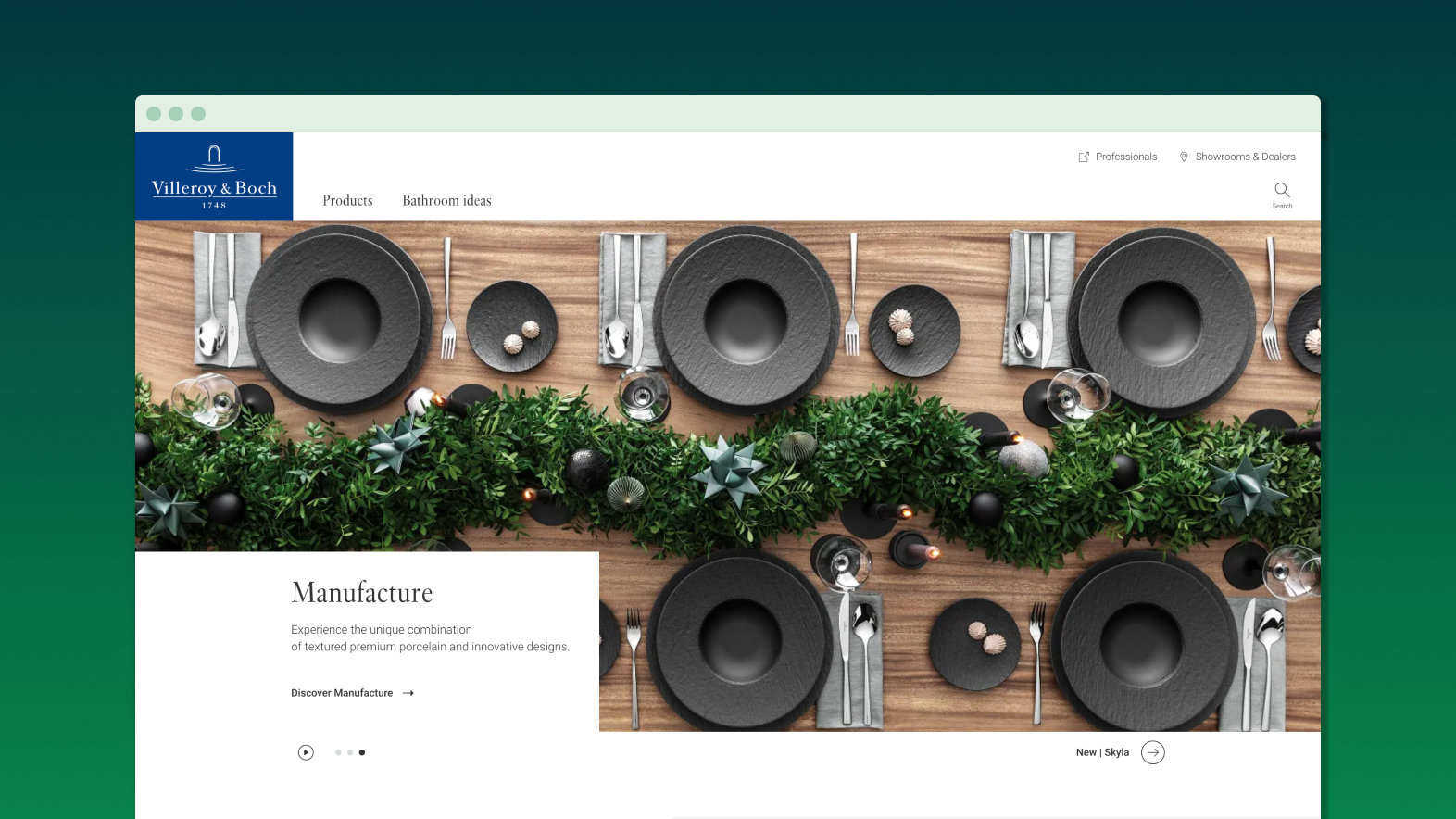
Villeroy & Boch chose Magnolia to create a unified, holistic platform strategy known as SHORPORATE, which merges their shop and corporate sites. The deciding factors were Magnolia's flexibility and its headless, composable architecture, which allowed them to select the best-of-breed tools for their platform.
The solution: a composable commerce setup, with Magnolia serving as the central CMS and SFCC handling the e-commerce functionalities – implemented by Magnolia platinum partner dotSource. Magnolia’s headless approach enabled a clear separation of content from the front-end, allowing the Salesforce Composable Storefront to retrieve product data from SFCC while drawing on Magnolia to enrich product pages with high-quality content. This empowered the content team to create richer, more informative product pages and better storytelling experiences.
The Result
Seamless Experiences, Faster Delivery, and Global Scalability
The new Magnolia-powered platform delivered significant, measurable outcomes. The seamless integration of content and commerce eliminated the technical distinction between shopable and non-shopable products, allowing for a more fluid customer experience. A key business benefit was the ability to manage content for both B2C and B2B products within a single system, streamlining operations and ensuring brand consistency. The implementation resulted in better performance, faster page load times, and simplified workflows for the content team, which in turn contributed to increased customer satisfaction and more conversions.
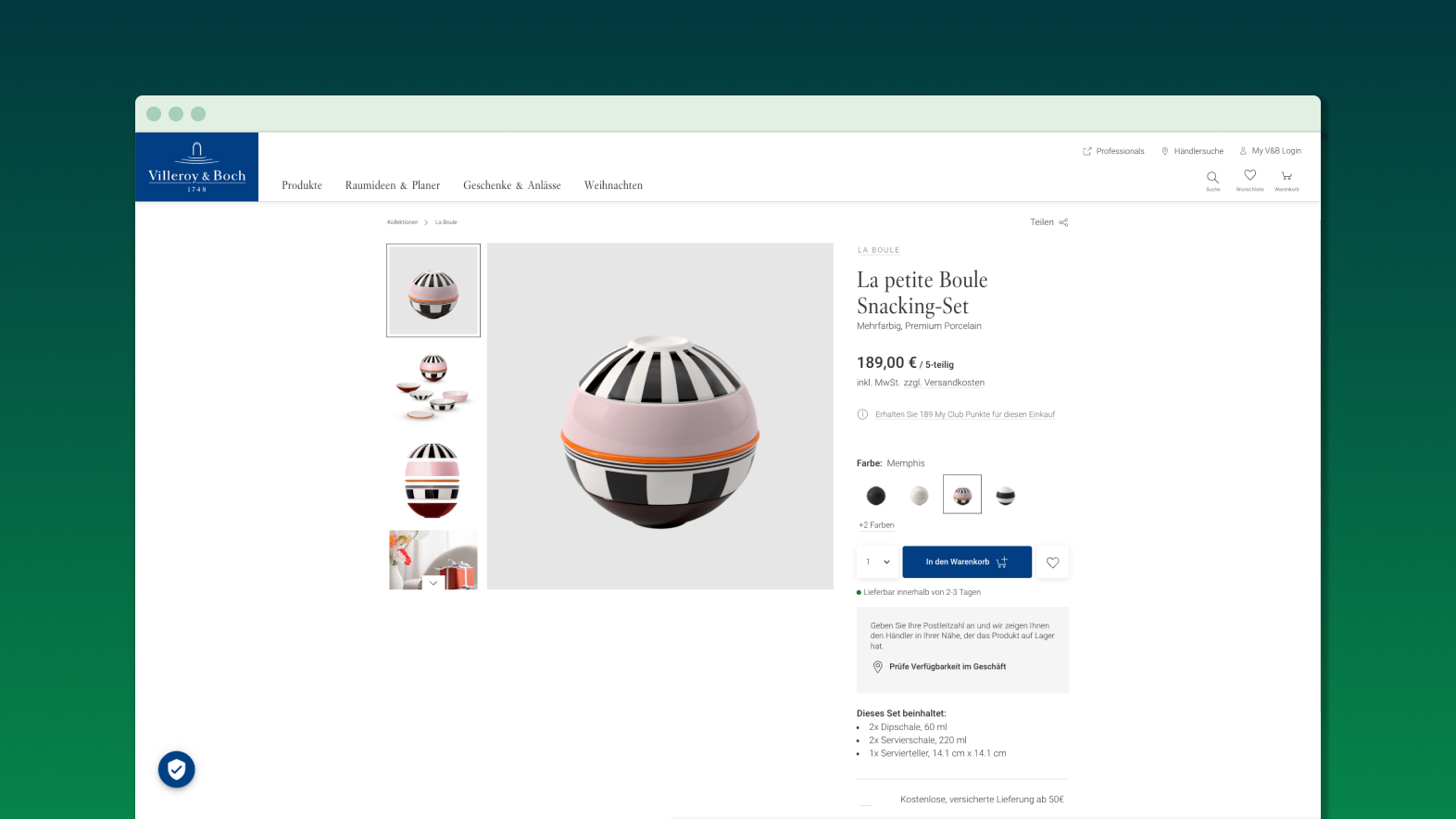
The shift to a single, unified platform dramatically accelerated their go-to-market timeline, with 33 websites launched in just six months. This rapid global rollout demonstrates the agility and scalability gained with a modern, composable architecture.
"The platform enables us to respond very flexibly to changes. For instance, making a product shoppable now only requires selecting the relevant template from the product data."